Articulated animals made a lot of people want to sell 3D prints, and that is now the problem. Maker's Muse found articulated prints at two department stores for $5 each. ZB Designs took its Wigglitz line to Target through Moose Toys and claims over 3,000 printers, a figure the article does not verify.
There is still a business at the other end. CNBC reviewed documents showing Victoria Essie Studio made about $428,000 gross and about $94,000 net in 2025 from fidgets mostly priced at $5 to $30. That is one unusual company with around 30 printers, not a forecast, and Fabbaloo warns most makers will not repeat these stories. The useful part is how it sells: its own website, themed drops and paid licences.
The buyer is often an adult
The obvious buyer is a parent. The better one may not be. The CNBC headline itself says the products are not just for kids, and the groups with the clearest reasons to pay are specific:
- Desk fidgeters pay for feel. Metal sliders at about $30 to $74 show how far that can go.
- Hobby keepers, such as reptile owners, want the species they own and will look past generic versions.
- Sensory buyers want a particular texture or click.
- Gift buyers want a surprise to unwrap, especially at Easter and Christmas.
- Shops buy wholesale. A Faire listing shows a fidget slug at $10 MSRP, and one dragon seller moved from Etsy into gift stores.
Aiming at adults may reduce the toy duties covered below, but that depends on the product and how it is marketed, so check before relying on it.
What the numbers say, and hide

Figures are modelled for a typical specific product in each niche, at its midpoint price and print time, and allow for materials, fees, packaging and $15 an hour of labour, but not shipping.
Party favours are easy to misread. Their figure is for a whole pack, and a 50-piece pack at $22.99 works out at about $0.46 each, before counting and bagging. Always check that price and time describe the same unit.
The bottom rows can mislead too. Long dragons look poor per hour, but a whole plate of them changes the sum. Work out how many fit on a plate and what a failed plate costs, then run it in the calculator.
Where there is still room
- Fidget sliders stand out: a small, fast print that reaches $12 to $25. Feel is the product, so own the design and tune the magnets. Near the $6.99 floor, you are just another copy.
- Surprise dragon eggs turn a cheap flexi into a gift, and Easter bundles show a clear peak. Gift packaging helps, and both egg and dragon need to be yours or licensed.
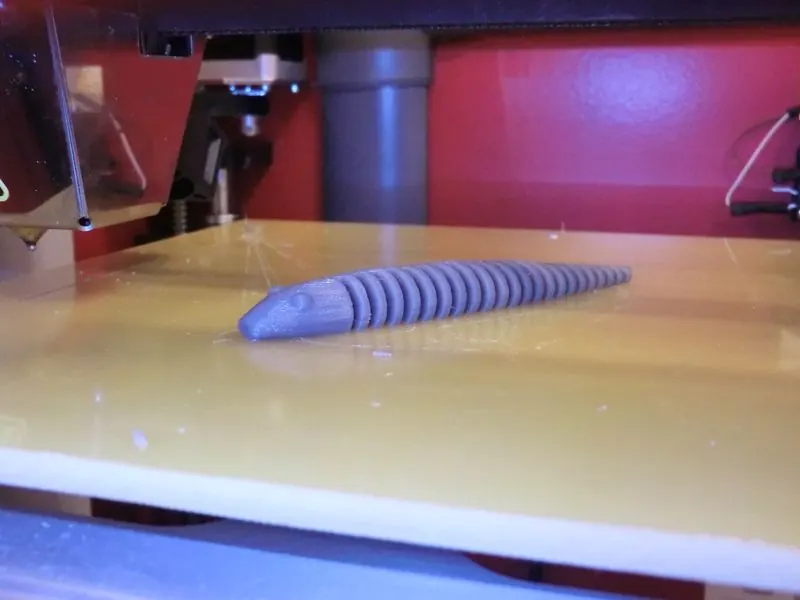
- Articulated snakes give you a defined buyer and room for your own colour morphs. Skip pocket sizes, where $3 listings set the floor.
- Spiky rollers and clickers leave a decent margin if the feel is good, but only UK prices were seen, so confirm US pricing first.
- Axolotls have a healthier price band than most small flexis. The listing data was thin, so check it by hand before acting.
Four to avoid
- Licensed character flexis can cost you the whole shop rather than one listing. A free fan file gives no right to sell, and the Pokemon owner has acted against a printed design before.
- Bulk party favours need heavy automation, and cheap Etsy file bundles may carry no real rights. They are usually bought for children, so toy duties apply as well.
- Infinity and gear cubes are a commodity, with free files and sale prices as low as $3.34.
- Print-in-place spinners and rings are everywhere for free, and no finished retail price surfaced.
Designing around the Etsy rule
Tom's Hardware names flexi dragons among the products caught by Etsy's original-design rule, and a purchased file usually does not help. Cinderwing3D's MyMiniFactory listings say a purchase gives no right to sell prints, though the designer sells a licence through a Thangs membership.
To build your own, pick a subject and study the real animal, not another flexi. Model your own joint spacing and proportions, then test until it moves as you intended. A real species gives you markings and morphs that are yours to interpret. Then release in themed drops, so each batch has a reason to exist. If you do license designs, pay for them, sell them on your own site and keep a second channel in case a listing disappears.
Is it a toy?
Ask this before you print, since the answer sets your compliance work.
- United States. CPSC says toys for children 12 or under need third-party testing, a Children's Product Certificate and tracking labels. Registered small batch makers can get relief on some tests, but not small parts testing. Check the current limits.
- United Kingdom. A 2026 safety report found printed animal figures that fit inside a small parts cylinder, and the listing was removed.
- European Union. Plan for CE marking and EN 71. UL says listings must show the responsible operator, warnings and conformity details. A new regulation applies from August 2030 with digital product passports.
- Magnets. CPSC's magnet standard covers products marketed for stress relief, and sets a strength limit for loose magnets small enough to fit a small parts cylinder. Toys sit under a separate toy standard. Secure yours so they cannot come free.
- Claims. Do not promise calm, focus or any medical benefit.
If the paperwork looks too heavy for a product, take that as your answer and choose a different product.
Estimates are ours unless a source is linked. This guide was drafted with AI and reviewed before publishing.

Compare prices, profit and competition across every product we score.
See product scoresGet more 3D print ideas that sell
New products worth printing, seasonal picks before the rush, and honest selling tips from Daniel. Completely free.